

I think what you want is your agent to go away and do really good work for you, and then come back with its work product to let you review, steer it, decide everything. But you can’t be overwhelmed, because it’s gonna do so many more things than you have time to look at, and if you’re always looking at it, you know, it can be slower than if you just did it yourself. And so it actually strikes me as an interface problem.
— on A Cheeky Pint Dario had this to say about the future of AI
The software we currently use is based on the idea of direct manipulation. It’s easy to describe as “you move a file into a folder by dragging the file into the folder”. Software wasn’t always like this. In fact a lot of developers today still use command line interfaces where you input commands and get an output. CLIs are more like indirect manipulation. But what does this have to do with AI? This interaction model needs to change, because AI breaks the assumptions direct manipulation rely on.
AI models are unpredictable, they are non-deterministic, and much slower than traditional code, which makes it impossible to use them for direct manipulation. We can use them for indirect manipulation (photo from photoshop), for example using Photoshops new magic eraser tool you can select the thing you want to remove from a photo and ask AI to do it. But you can’t just drag the thing out of the image. AI is fundamentally unpredictable, which makes it unsuitable for direct manipulation.
If direct manipulation doesn’t work, how should we work with AI? Here’s another clue from Dario’s quote, he talks about an example where you have several AI Agents doing work for you. And your job is to guide them, to help them understand when they’re doing something right and when they’re getting it wrong.
The more Agents you have working for you, the better! But the more Agents you have doing work for you, the easier it is to get overwhelmed.
At INXM we’re currently experimenting with ways of solving this, and no doubt we will find even better ways of working with AI over time. But we’ve already made meaningful improvements by building our platform to be asynchronous first. You don’t sit there watching AI writing a wall of text. When it needs your input, it will come to you.
You ask INXM to do something and the platform creates a plan to reach that goal. It tells you about it, and you give feedback. This process can happen once or ten times until you’re ready to let the plan be executed.
While INXM is doing work for you the same feedback loop continues happening, if something doesn’t go according to plan the platform will ask you for feedback or next steps before it continues working.
When INXM is done working for you, it again comes back to ask for your input.
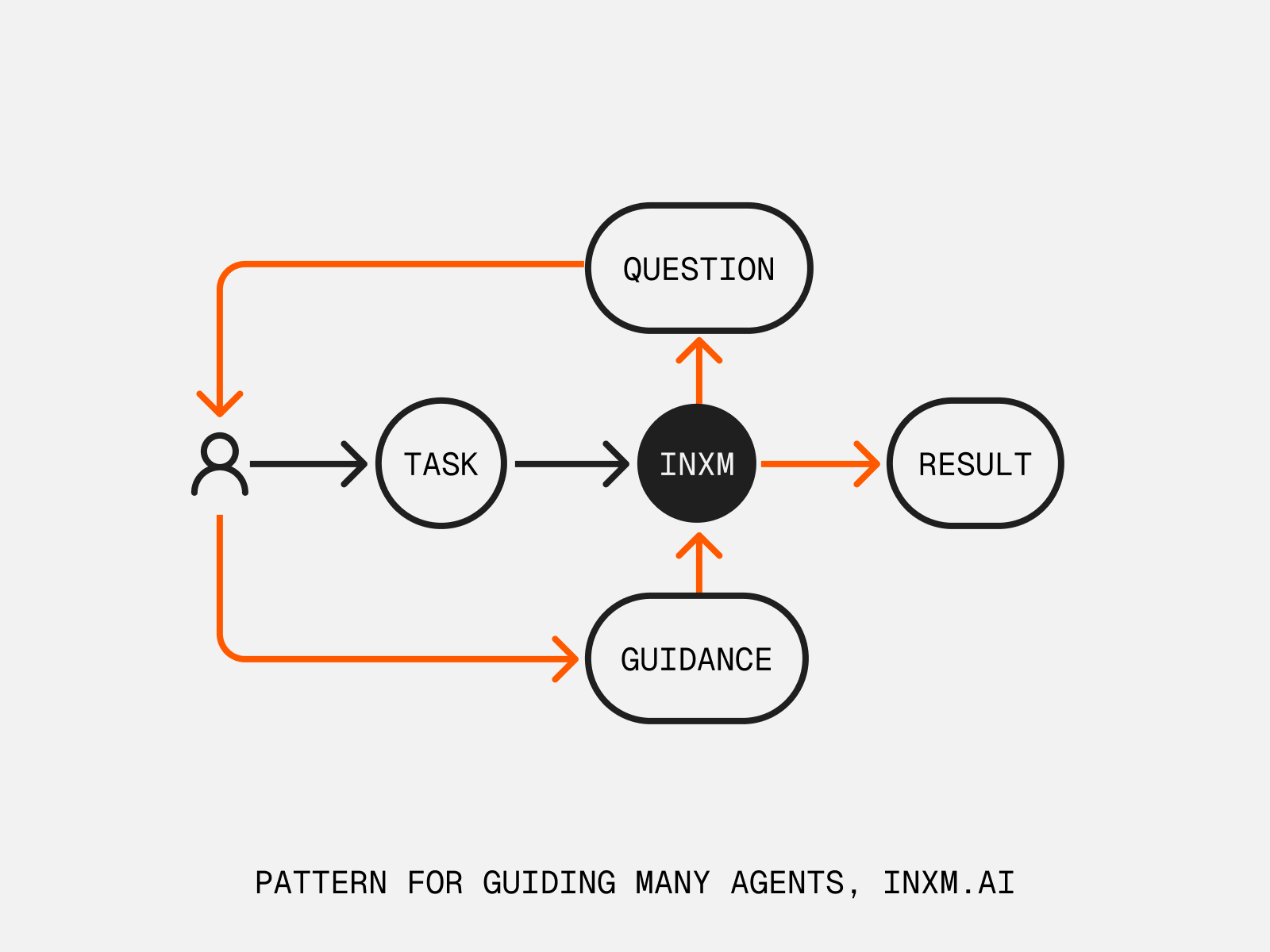
The key here is that we treat all work as fundamentally asynchronous. The platform does work for you, and then asks for input. Whether that’s while it’s figuring out a plan to do something complicated, or checking your CRM notifications, or collecting feedback from the department heads. The specific task doesn’t matter. You simply ask it to do work, and you can trust that it will come back to you with whatever the result is. This workflow is a shift from direct manipulation to guided orchestration, the interaction model AI actually requires.
This doesn’t stop you from checking on long running work however, everything is transparent in INXM, there’s no magic black box where some agent can run amok. If you wonder why we’re still waiting on the sales report, you can just open the task and see what we’re waiting for. Steve didn’t answer? Ask INXM to reach out again.
Summary
We were happy to learn Anthropic aligns with us on what the future of work looks like. But we suspect most of the world is starting to have the same realisations we’ve been working on for the last year.
Come with us as we reinvent how we do work.